
Teams and Multi-Company: Collaborative Tendering for Your Whole Organisation
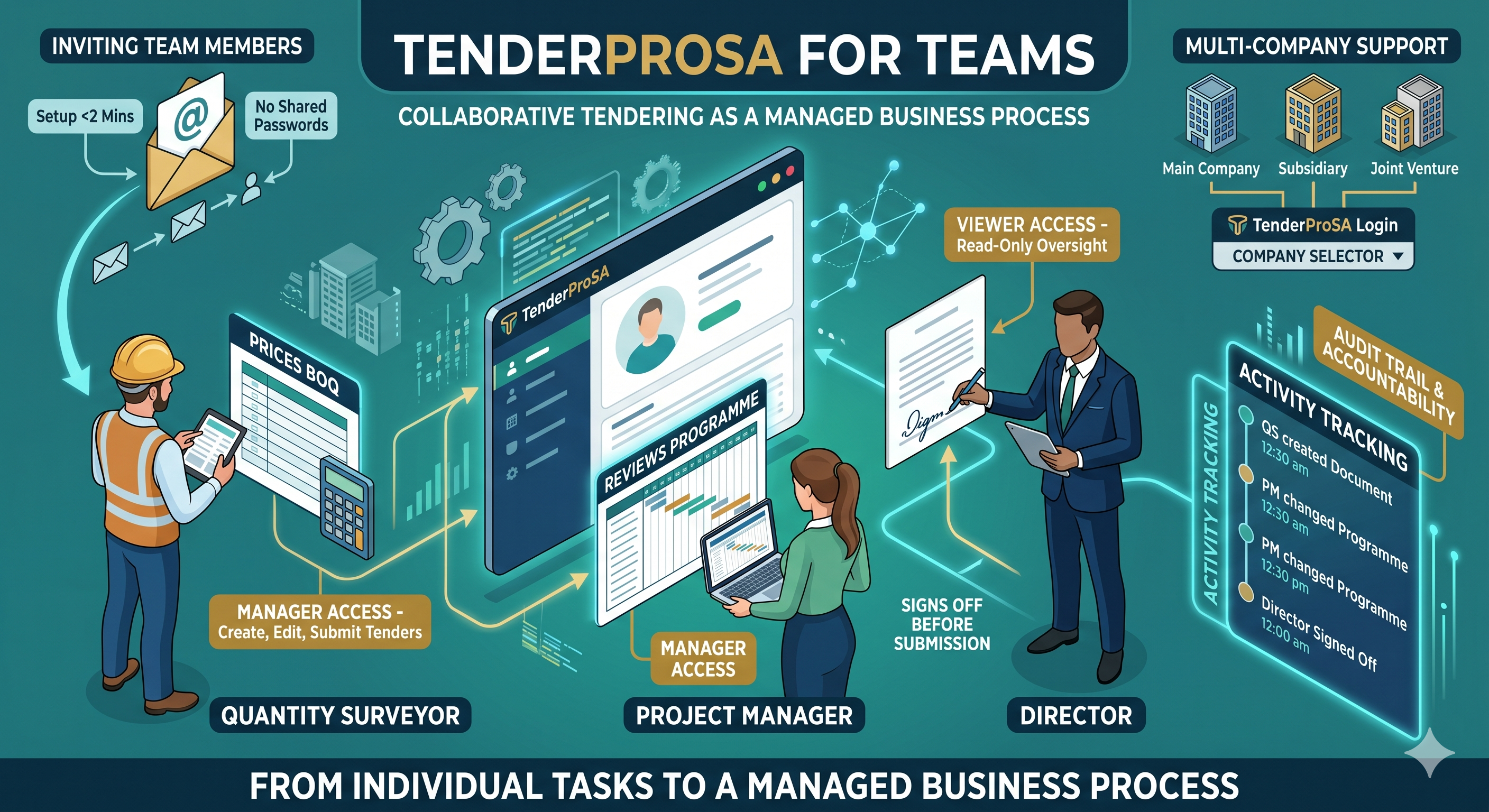
Tendering is rarely a solo activity. A quantity surveyor prices the BOQ. A project manager reviews the programme. A director signs off before submission. The Teams feature brings your whole team into TenderProSA with the right access for each role — no shared passwords, no version confusion.
Inviting Team Members
From Account Settings you can invite team members by email. Each person gets their own login and works within your company's TenderProSA account.
Invitation emails are sent immediately and setup takes under two minutes. Every action is attributed to the person who performed it, so there's never any ambiguity about who changed what.
Role-Based Access
Three roles are available:
- Admin — full access including billing, settings, and team management
- Manager — can create, edit, and submit tenders and estimates, and view all company data
- Viewer — read-only access to tenders and documents, useful for directors or clients who need oversight without the ability to make changes
Activity Tracking
Team activity is logged against each action — who created a document, who made a change, when a submission was exported.
This audit trail is valuable for:
- Accountability within the team
- Project handovers between staff members
- Understanding how your team works through the tendering process over time
- Reviewing past decisions when a similar tender comes up again
Multi-Company Support
If you operate through more than one registered entity — a main company, a subsidiary, a joint venture — you can manage multiple companies under a single TenderProSA login.
Switch between companies using the company selector in the top navigation. Each company has its own:
- Tender list and pipeline
- Documents and compliance records
- Team members and permissions
- Credit balance and billing
Collaborative Tendering as a Business Process
With Teams and Multi-Company in place, the full tender workflow can happen inside TenderProSA — from opportunity identification to final submission — with the right people involved at each stage.
It's a meaningful step toward treating tendering as a managed business process rather than a collection of individual tasks.